Philippine Tourism : Why Small Cities Are the Future
Contents
A Personal Reflection on Bacolod, Silay, Dumaguete, and Iloilo
Disclaimer
Before discussing the cities in this article, I want to clarify something important. The Philippines has many small cities with remarkable tourism potential, and the few mentioned here are certainly not the only ones worth exploring. I am focusing on Bacolod, Silay, Dumaguete, and Iloilo primarily because they are geographically close to me and are places I know well. My familiarity with these cities allows me to observe their culture, lifestyle, and tourism character more personally. Other cities across the country could equally deserve attention in a similar discussion.
Over the years, I have come to realize that some of the most meaningful travel experiences in the Philippines do not always happen in the country’s largest cities or most famous tourist islands. While places like Manila, Cebu, Boracay, and Palawan continue to attract global attention, I have often found myself drawn to smaller cities where life moves at a different rhythm.
In these cities, travel feels less hurried and more personal. Streets are easier to walk, conversations with locals happen naturally, and culture is not presented as a spectacle but as something lived daily.
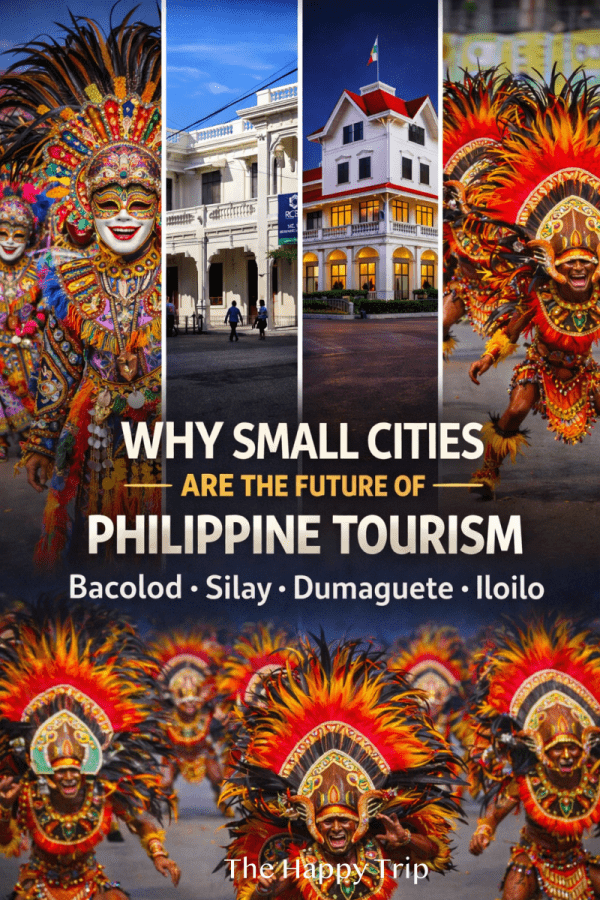
Cities such as Bacolod, Silay, Dumaguete, and Iloilo demonstrate why smaller urban centers are increasingly important in the future of Philippine tourism. They offer travelers something many large metropolitan destinations struggle to maintain—authenticity, cultural continuity, and a strong sense of community.
Globally, travel trends are also moving in this direction. Many travelers today seek experiences that allow them to engage more deeply with local culture rather than simply moving quickly from one attraction to another (UN World Tourism Organization, 2023).
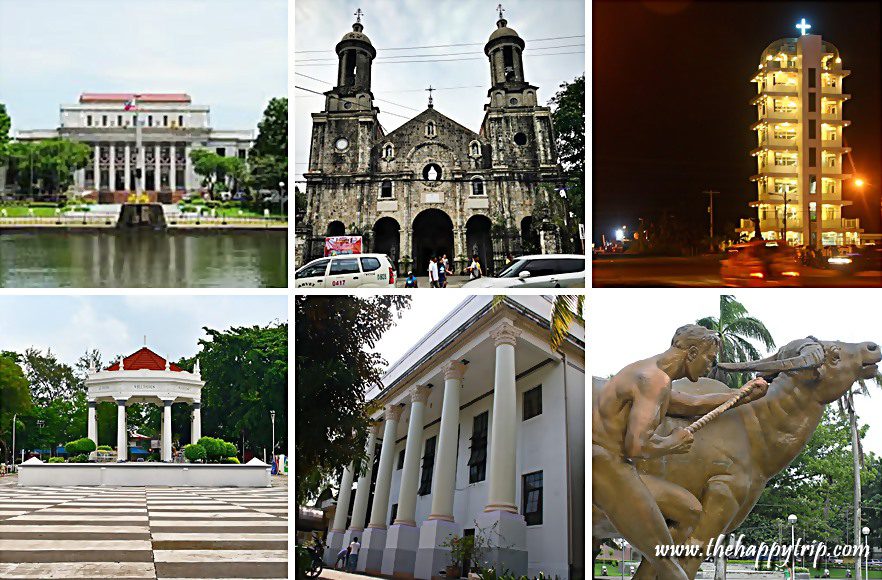
Living close to Bacolod has allowed me to see how the city’s tourism identity has evolved over time. Bacolod has long been known as the “City of Smiles,” but what visitors often discover when they spend more time here is that the warmth of the city extends beyond its nickname.
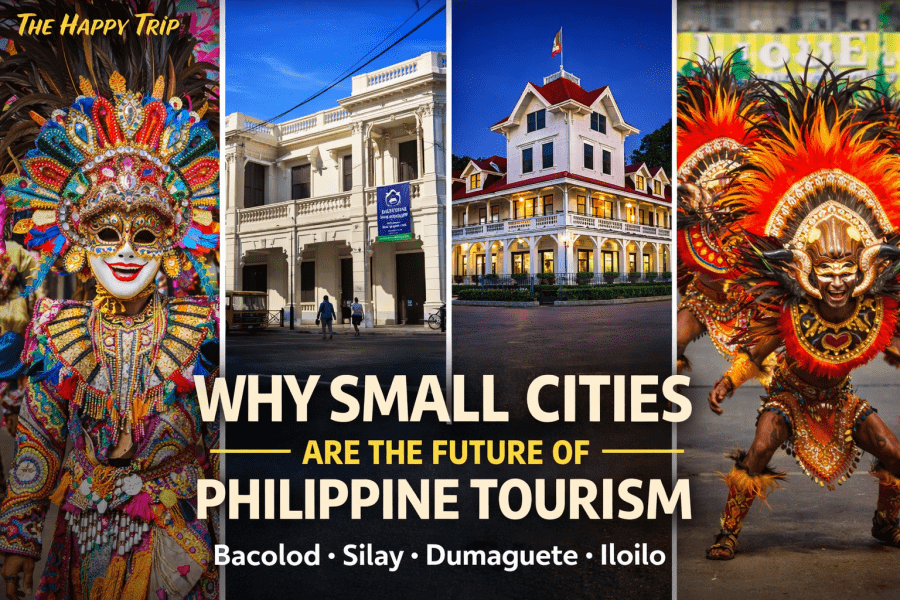
One of Bacolod’s strongest cultural expressions is the MassKara Festival, which fills the streets with color, music, and artistic energy. Festivals like this are more than tourist attractions; they are reflections of community resilience and creativity.
But what I find particularly interesting about Bacolod is how art and creativity are becoming part of the tourism experience itself. Visitors are no longer just spectators. Many now participate in creative activities that allow them to engage with local culture more directly. I have personally seen travelers discover Bacolod through artistic experiences such as mask painting at Jojo Vito Designs Gallery, where visitors become part of the creative process rather than simply observing it.
Bacolod also holds a special place in Philippine culinary tourism. The city’s reputation for food—from its famous chicken inasal to a wide range of local delicacies—has become one of the reasons many travelers make it part of their itinerary. Food tourism has grown significantly worldwide because cuisine offers travelers an immediate and sensory connection to local culture (World Tourism Organization, 2023).
What I appreciate most about Bacolod is that it remains approachable and human in scale, making it easy for visitors to feel comfortable and connected to the place.
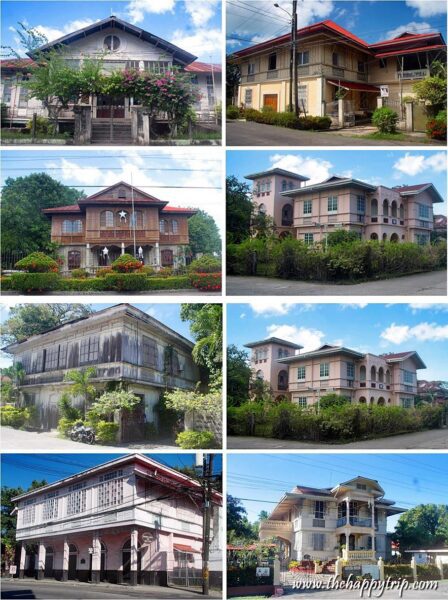
Whenever I visit Silay, I feel as if I am stepping into a different chapter of history. Often referred to as the “Paris of Negros,” Silay is known for its remarkable collection of heritage houses that date back to the region’s sugar industry during the late nineteenth and early twentieth centuries.
These ancestral homes tell stories about the economic and cultural history of the region. Some have been restored as museums, allowing visitors to experience how families lived during that period.
What makes Silay special to me is that the city has managed to preserve its architectural heritage in a way that many larger cities have not. Rapid urbanization in metropolitan areas often results in the loss of historic structures, but in Silay, the past remains visible in its streets and buildings.
Heritage tourism has become increasingly important around the world because travelers are drawn to destinations that maintain their historical character (UNESCO Cultural Tourism Report, 2022). Silay demonstrates how a small city can transform its historical identity into a meaningful tourism experience.
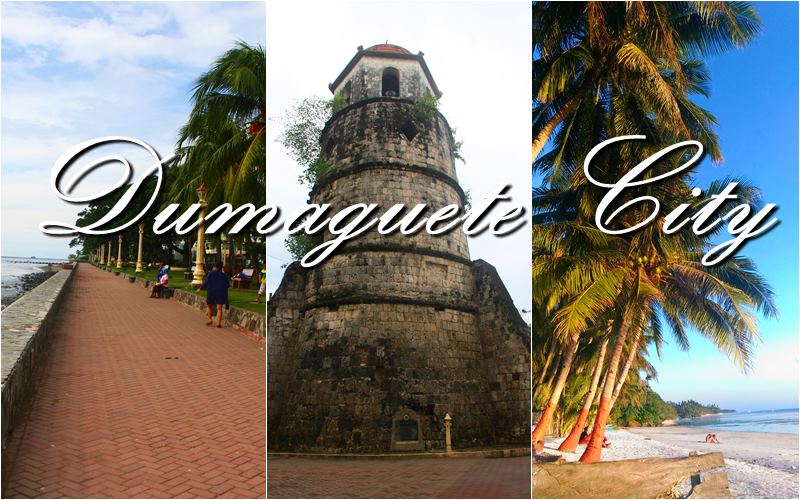
Dumaguete has always felt different to me from many other Philippine cities. Known as the “City of Gentle People,” it has a calm and welcoming atmosphere that encourages visitors to slow down.
Part of Dumaguete’s charm comes from its academic environment. The presence of Silliman University, one of the country’s oldest universities, gives the city a vibrant intellectual and cultural atmosphere. University towns around the world often develop a creative and reflective energy that attracts travelers who appreciate slower, more thoughtful experiences.
One of my favorite places in Dumaguete is Rizal Boulevard, where locals and visitors gather by the sea. Watching people walk along the boulevard in the late afternoon reminds me that travel does not always need dramatic attractions to be memorable. Sometimes, the character of a place is revealed in everyday moments.
Dumaguete is also a gateway to nearby destinations such as Apo Island, internationally known for its marine biodiversity and successful community-managed marine sanctuary. Nature-based tourism destinations like this show how smaller cities can support sustainable tourism while protecting fragile ecosystems.
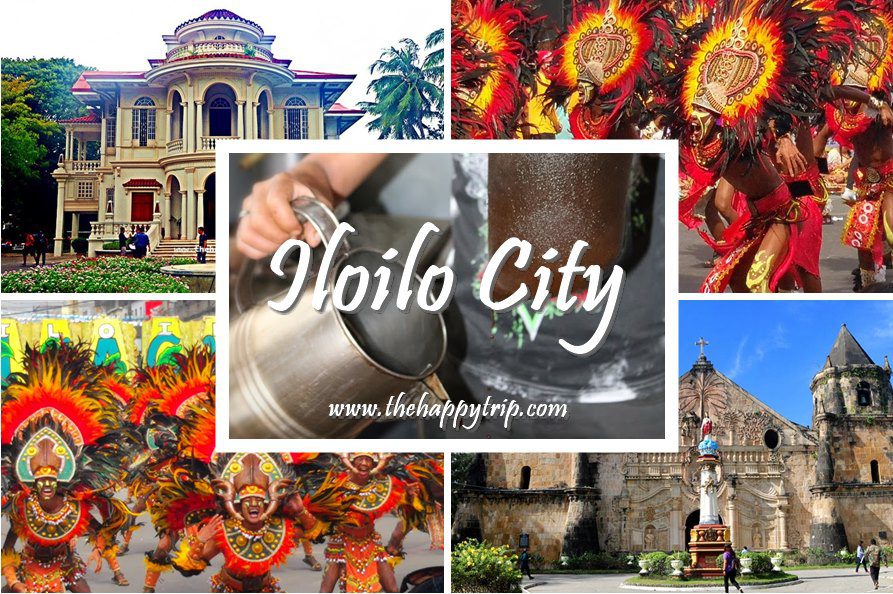
Whenever I visit Iloilo, I am reminded that a city can modernize without losing its cultural identity. Over the past decade, Iloilo has undergone impressive urban transformation while also preserving its heritage.
One of the most visible examples is the Iloilo River Esplanade, a beautifully designed waterfront space that has become one of the city’s defining landmarks. It has improved not only the city’s appearance but also the quality of life for residents and visitors.
At the same time, Iloilo has invested in restoring historic churches, heritage houses, and cultural districts. These efforts reflect a broader understanding that modern development and heritage preservation can coexist.
Iloilo is also widely celebrated for its food culture. Dishes such as La Paz Batchoy and Pancit Molo have become part of the city’s identity and contribute to its growing reputation as a culinary destination.
Reflecting on these cities, I have come to appreciate why smaller urban destinations are becoming increasingly attractive to travelers.
First, they often retain strong cultural authenticity, where traditions and daily life remain visible rather than staged for tourism.
Second, their manageable scale allows visitors to explore comfortably without the overwhelming congestion that often characterizes large metropolitan centers.
Third, smaller cities encourage more natural interactions with local communities, which often become the most memorable part of travel.
Finally, these destinations support experiential tourism—activities that allow visitors to participate in culture rather than simply observe it.
From my own perspective, cities like Bacolod, Silay, Dumaguete, and Iloilo represent a promising direction for Philippine tourism. They demonstrate that travel experiences do not always depend on scale or global fame. Sometimes, the places that leave the strongest impression are those where culture, history, and community remain deeply connected.
As travelers increasingly seek authenticity, cultural engagement, and meaningful experiences, smaller cities may very well shape the next chapter of tourism in the Philippines.
Holy Week in Negros Holy Week in Negros: Quiet Corners Where It Still Feels Like…
Philippines Domestic Travel Costs Philippines Domestic Travel Costs: Why Is It Sometimes Cheaper to Travel…
Skipping Siquijor During Peak Season When Paradise Gets Too Popular: Tourism Growth, Carrying Capacity, and…
Philippine Overtourism : Crowded Destinations, Alternative Places Philippine Overtourism: 10 Crowded Destinations and their Alternative…
Bacolod During Summer Bacolod During Summer: Bacolodnon’s Guide Summer in Bacolod always feels familiar to…
Golden Week Holiday in China What Golden Week Means for Tourists Planning a China Trip…
View Comments
Rojean "Rj" Bermudez
rojean.bermudez@lccbonline.
edu.ph
Rojean "Rj" Bermudez
Secondary cities like Bacolod, Silay, Dumaguete, and Iloilo City can compete with major tourism hubs by focusing on culture-based tourism and forming a regional alliance that highlights their unique identities instead of promoting themselves separately.
One way to do this is by making travel between these cities easier and more appealing such as prioritization of government infrastructure like the construction of the Panay Negros bridge. In this way, gastronomic cities like Bacolod, Silay, Dumaguete and Iloilo cities can collaborate to develop food-crawl tourism that allows visitors to explore different local cuisines in one trip.
Jollena Mahilum
1. How can secondary Philippine cities such as Bacolod, Silay, Dumaguete, and Iloilo City design a collective global destination strategy that competes with large tourism hubs like Manila and Boracay while maintaining their individual cultural identities? What governance structures, regional branding alliances, and cross-city tourism networks would be necessary to make such a strategy viable internationally?
- Since Manila and Boracay are the primary hubs of Philippine tourism-- which they represent a high- volume, two-center, urban-to-beach holiday experience, secondary Philippine cities such as Bacolod, Silay, Dumaguete, and Iloilo should shift from a model of mass tourism to a collective heritage and slow travel strategy as the Department of Tourism(DOT) has adopted, allowing travelers to connect with locals, enjoy regional cuisine, and discover the journey rather than just the destination. By branding themselves as a unified, sustainable alternative to Manila or Boracay, they can promote a "slow travel" experience. This requires a regional tourism council to harmonize branding, integrate transportation networks, and share marketing resources to compete internationally while protecting local, unique identities.
Ma. Arian L. Cabrera
Question No. 1
By focusing on authentic and immersive travel experiences that large destinations like Manila and Boracay often cannot provide, secondary Philippine cities such as Bacolod, Silay, Dumaguete, and Iloilo City can position themselves as a collective global destination. These cities can develop a Visayan Heritage and Culture Circuit that attracts international travelers seeking meaningful cultural experiences. Each city would highlight its distinct identity—Bacolod through its vibrant festivals, Silay through its well-preserved heritage houses, Dumaguete through its creative coastal lifestyle, and Iloilo through its rich culinary traditions and historic districts.
For this strategy to succeed, strong coordination and governance are essential. Establishing a Visayas Tourism Consortium or regional tourism council would allow these cities to align marketing efforts, share resources, standardize service quality, and exchange tourism data for better planning. A joint destination management board could also oversee infrastructure development, research, and crisis management while ensuring that smaller cities such as Silay have equal representation in decision-making.
Cross-city tourism networks are equally important. Integrated travel itineraries, improved transportation links, shared digital platforms, and coordinated social media campaigns can create a seamless visitor experience across the region. Partnerships with international travel platforms and cultural organizations can further expand global visibility.
By maintaining their unique cultural identities while promoting a shared regional brand, these secondary cities can offer culturally rich, sustainable, and distinctive tourism experiences that allow them to compete with larger tourism hubs.
To make minor Philippine communities into high-end "slow tourism" destinations on the global market, you need to focus on cultural authenticity, sustainability, and high-value travel experiences. Slow tourism is not about mass tourism; it's about getting to know local communities, traditions, food, and nature in a meaningful way. By using these things, smaller communities in the Philippines can compete with culturally rich places like Kyoto and Hoi An while also following the World Tourism Organization's guidelines for sustainability.
The first thing the plan should do is set destinations apart from each other. Heritage architecture, traditional crafts, food traditions, and local festivals can all be found in smaller cities like Bacolod, Silay, Vigan, or Dumaguete. Creating curated experiences like history walking tours, farm-to-table dining, community-led seminars, and eco-cultural homestays may make travel more engaging and authentic for high-value tourists.
Second, the approach needs to include sustainable tourist management. Local governments should follow the World Tourism Organization's principles of sustainability and put in place visitor management systems, rules to safeguard the environment, and community-based tourism programs. Promoting low-impact transportation, maintaining cultural sites, and helping local businesses make sure that tourism expansion is good for locals and protects local ecosystems and history.
Third, it is important to have a plan for foreign marketing. The tourism authority can promote these places as a group under the "Slow Cities of the Philippines" campaign, which is aimed at markets in Asia and the Pacific, like Japan, South Korea, Australia, and Singapore. Digital storytelling, working with eco-friendly travel sites, and teaming up with small travel agencies are all good ways to target tourists who want to experience a culture instead of just going to a lot of places.
Last but not least, the premium posture must be supported by infrastructure and quality standards. Visitors will have better experiences if money is spent on small boutique hotels, preserving cultural assets, reliable transportation, and experienced tourist workers. Capacity-building programs for local communities will also make sure that services are of high quality while yet being real.
Smaller cities in the Philippines can become popular slow tourism destinations in the Asia-Pacific region by combining cultural preservation, sustainability, focused marketing, and community involvement.
Tourism in several cities like Bacolod, Dumaguete and Iloilo are actually had emerged its existence in Philippines fully and had created its own cultural identity despite the modernization and contemporary innovations on recent time. Looking into its uniqueness apart from other destinations in the country, it can continue to improve thru investing marketing campaigns to empower its visibility in the tourism sector with collaboration with the traditional competitors, integration with various channels and partnerships. Strong government and private joint forces supporting tourism locally will also enable smaller cities to develop more infrastructures and destinations to unfold tourism channels. Alongside, the sustainability goal is still focused on protecting the socio environment that provide recreational activities, ideal for travelers and local people providing essentials and enhancing mental wellbeing.
Over the next two decades, smaller Philippine cities can evolve into globally competitive tourism clusters through targeted investments in infrastructure, cultural preservation, digital tourism systems, and collaborative destination governance. Improved transport connectivity, heritage conservation programs, and digital tourism platforms will enhance accessibility and global visibility, while coordinated governance among national and local institutions will ensure strategic alignment. Policymakers should prioritize investments that strengthen cultural assets and sustainable tourism ecosystems, enabling these cities to achieve long-term international recognition while supporting inclusive local economic development.
Policymakers should prioritize strategic investments in infrastructure, cultural capital, digital tourism ecosystems, and destination governance for smaller Philippine cities to evolve into internationally recognized tourism clusters.
In terms of infrastructure, the government must focus on the development of different transportation links, modern facilities, and other sustainable energy solutions to enhance accessibility and tourist experience. It should also invest in the preservation and promoting other local and small heritage, arts and traditions. It could also leverage technology to create tourism platforms, such as apps or social media accounts, that offer personalized travel experiences. In terms of destination governance, local governments must establish collaborative governance frameworks to ensure coordinated efforts across different localities.
By prioritizing these areas, policymakers can maximize global visibility while fostering inclusive local development. Strategic partnerships and community engagement are essential to ensure that tourism benefits are widely shared and sustainable.
Minguez, Therese Marie A. MBA
Question #1
To make a regional or cross-city tourism strategy viable, three layers need to work together. These are governance structures, regional branding alliances and operational tourism networks. As for me, a lover of local products and local food too, I really have a huge admiration to some LGUs here in NIR holding events than can anchor regional tourism strategies like for example food festivals, sports events, travel trade partnership and also thematic tourism alliances. Cities that can maintain their own identity. Why I like going to Silay? Mainly because of food. Nowadays, food tourism is the fastest-growing travel trends. They have this kind of visual identity too by showcasing heritage houses. My second personal favorite is Dumaguete as well. I love spending my holidays there once in a while. I love Dumaguete because it gives me this laidback feels. I will keep coming back to this beautiful city with gentle people. They also have this strong sustainable tourism regulations. Indeed, promoting tourism in our own city requires a different kind of branding, experiences and partnerships. You can also be a tourist in your own city. You can promote your own city for free thru your social media posts. Start with your own city and ask yourself, what attractions are unique here? What culture, what vibe or mood or nature can visitors experience? What stories or history exist? In doing so you can already create possible tourism themes like cultural heritage, food tourism, nature and adventure, festivals, arts and creativity. So for now, unahon ta pilion lagawan ang Negros. Madamo pa diri sang mga dapat naton tun-an kag dapat ma experiensyahan. Indi ta ma kampanyahan ang aton tourism industry kon kita mismo indi maka appreciate sang aton dunang manggad kag dutang natawhan. Choose Negros. Love Negros.
From a global competitiveness perspective, smaller Philippine cities can evolve into internationally recognized tourism clusters through sustained investments in infrastructure, cultural capital, digital tourism ecosystems and effective destination governance. Foundational infrastructure is essential, including modern airports and seaports, efficient road and public transport networks and reliable utilities such as power, water, telecommunications, and waste systems. These must also be climate-resilient and disaster-ready to ensure long-term reliability and investor confidence. Beyond physical development, cities need to strengthen their cultural capital by preserving heritage sites, promoting local traditions, supporting creative industries and developing signature festivals, cuisine and arts that differentiate them from other destinations. A strong and unique identity is what attracts global travelers seeking authentic experiences.
Using the concept of experiential tourism, how can cultural assets such as the MassKara Festival and heritage districts in Silay be transformed into scalable global tourism products without commodifying or diluting their cultural authenticity?
What governance models, intellectual property strategies, and community participation mechanisms would ensure both economic value creation and cultural preservation?
Events such as the MassKara Festival and the heritage districts of Silay City can be transformed into scalable tourism products through experience design rather than mass commercialization. Instead of merely staging festivals for spectators, cities can develop experiential tourism programs that allow visitors to actively participate in cultural activities. These may include festival immersion programs such as mask-making workshops, dance training sessions, and community homestays that allow tourists to experience local traditions firsthand. In addition, heritage storytelling tours could be organized where guides narrate the history of ancestral houses while integrating culinary heritage experiences that highlight traditional local cuisine. This approach aligns with experiential tourism theory, which emphasizes participation and meaningful engagement rather than passive observation.
To sustain these initiatives, a public–private–community partnership (PPCP) governance model can be implemented to manage cultural assets effectively. Under this framework, the local government would focus on regulation and infrastructure development, cultural foundations would be responsible for protecting and preserving heritage, and local communities would serve as primary experience providers. Furthermore, intellectual property protection should be established for festival symbols, designs, and performances through mechanisms such as geographic indication (GI) branding and cultural trademarks for festival imagery. These protections help prevent unauthorized commercialization and preserve cultural authenticity. Equally important is strong community participation through cooperative ownership of tourism services, revenue-sharing systems, and participatory planning councils. Such mechanisms ensure that tourism development generates economic benefits for local residents while safeguarding the cultural heritage that makes these destinations unique.